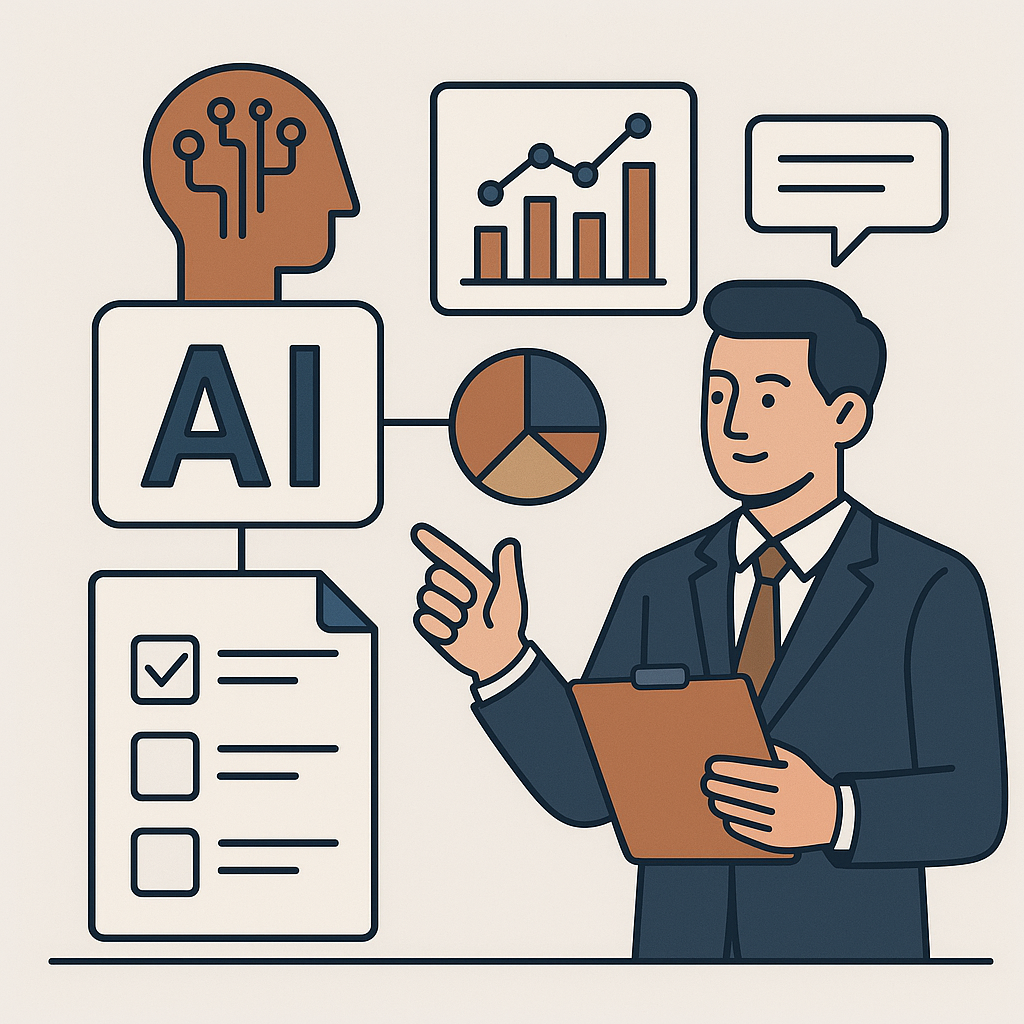
From Analyst to Strategic Partner
In 2026, the role of the business analyst (BA) has evolved. You are no longer just the bridge between IT and the business. You are expected to surface insights, predict outcomes, and guide decisions using data. AI tools are making that possible. The best BAs are not being replaced. They are being amplified. Here are the practical use cases that matter right now.
1. Requirements Extraction from Unstructured Data
One of the most time-consuming tasks for any BA is turning hours of meeting recordings, emails, and chat logs into structured requirements. In 2026, AI-powered tools can listen to a recorded stakeholder workshop and automatically extract business rules, pain points, and acceptance criteria. For example, a BA at a retail company used a platform like Otter.ai combined with a custom GPT to distill a 90-minute discovery session into a prioritized feature list in under five minutes. The output included dependencies and risk flags that the BA would have missed until the second review. This frees you to focus on validation and negotiation, not transcription.
2. Automated Stakeholder Sentiment Analysis
Understanding how different stakeholders feel about a proposed change is critical. AI can now analyze stakeholder communications (emails, survey responses, and even Slack messages) to gauge sentiment, resistance, and alignment. A BA at a financial services firm used a tool like MonkeyLearn to analyze over 500 emails about a new compliance workflow. The AI flagged that compliance officers were confident but operations managers were confused about the new steps. The BA then scheduled targeted clarification sessions, reducing rework by 40%. This is not about spying on people. It is about proactively removing friction.
3. Data-Driven User Story Generation
Writing clear user stories is an art. In 2026, AI helps you generate better ones by analyzing existing data. Tools integrated with product management platforms like Jira or Linear can suggest user story titles, descriptions, and even acceptance criteria based on historical patterns. For instance, if your team has a backlog of stories about login flows, AI can propose a new story: "As a returning user, I want to reset my password without email verification so that I can regain access faster." The BA still refines and prioritizes, but the AI accelerates the initial draft. This cuts story writing time by 30-50%.
4. Predictive Impact Analysis
Before a change is approved, BAs need to estimate its downstream effects. AI models can simulate the impact of a new feature on downstream systems, user behavior, or regulatory compliance. A BA in healthcare used a predictive AI tool (built on their own historical data) to assess the risk of a new patient portal feature triggering unexpected load on legacy databases. The model predicted a 20% increase in query time. Armed with this insight, the BA pushed for a performance test plan before development started, avoiding a production incident. This is the kind of foresight that makes BAs indispensable.
5. Real-Time Requirements Validation
How many times have you discovered during UAT that the requirements did not match what the developers built? In 2026, AI tools can compare the natural language requirements with the actual code or system behavior. For example, a BA can upload the original user stories alongside the test scripts or even the source code (via embeddings). The AI flags discrepancies: "The requirement says 'email notification within 5 seconds' but the code shows a delayed batch job every 30 minutes." This allows the BA to catch issues early, saving days of rework and building trust with developers.
6. It Is Not Magic: What You Still Need
AI in business analysis is powerful but not foolproof. You still need to do the hard thinking. AI can suggest but cannot validate business value. It can summarize but cannot read a room. It can generate but cannot build relationships. The best BAs in 2026 combine AI speed with human empathy. They also watch for data quality issues and bias in the AI outputs. A rule of thumb: treat AI output as a draft from a very fast intern. Verify everything, especially assumptions about your unique context.
"The future BA does not worry about being replaced by AI. They worry about the BA who uses AI while they do not."
That quote from a 2025 Gartner report sums it up. The tools are ready. The question is whether you are ready to adopt them.
Getting Started Tomorrow
You do not need a giant budget. Start with one repetitive task. Maybe it is extracting meeting notes into action items. Maybe it is categorizing user feedback. Pick a tool that integrates with your existing stack. Run a small pilot. Measure the time saved. Show the results to your manager. Then scale. By the end of 2026, the BA who uses AI will be a strategic advisor. The one who does not will be a note-taker. Choose wisely.
- Use AI to automate the boring parts: transcription, extraction, summarization.
- Use AI to detect patterns: sentiment, risk, dependencies.
- Keep the human judgment: context, relationships, trade-offs.
The AI era for BAs has arrived. It is practical, it is powerful, and it is happening now. Go make it yours.